
The world of software architecture is ever-evolving, and one of the most exciting developments in recent years has been SOA OS23. This cutting-edge platform is changing how businesses approach service-oriented architecture. But what exactly makes SOA OS23 stand out? With its robust features and innovative capabilities, it’s time to dive into everything this remarkable system offers. Whether you’re a developer, IT professional, or business leader, understanding SOA OS23 can pave the way for greater efficiency and success in your projects. Let’s explore the fascinating journey that led us to this advanced version and uncover why it’s making waves across industries.
What is SOA OS23?
SOA OS23 is the latest iteration of service-oriented architecture, designed to facilitate seamless integration and communication among software applications. This platform empowers organizations to build flexible and reusable services that can be easily adapted as business needs evolve.
At its core, SOA OS23 emphasizes modular design. It allows different components of a system to interact without being tightly coupled, which enhances scalability and agility. It’s not just about connecting systems; it’s about creating an ecosystem where various services work harmoniously together.
One standout feature is its enhanced interoperability capabilities. SOA OS23 supports multiple protocols and data formats, ensuring smooth exchanges between diverse technologies. This flexibility opens doors for innovation while minimizing disruptions during upgrades or changes in infrastructure.
With user-centric design principles at play, SOA OS23 also prioritizes ease of use for developers and end-users alike. The focus on usability encourages broader adoption across teams within organizations.
History of SOA and its evolution to OS23
Service-Oriented Architecture (SOA) emerged in the late 1990s as a response to the growing complexity of software systems. It aimed to facilitate interoperability and integration among disparate applications. SOA introduced modular service components, allowing businesses to adapt more quickly to changing demands.
As technology advanced, so did SOA’s capabilities. The shift toward web services in the early 2000s marked a significant milestone. This evolution fostered collaboration across different platforms and programming languages.
With the rise of cloud computing and microservices architecture, traditional SOA began morphing into what we now recognize as OS23. This latest iteration emphasizes scalability, flexibility, and enhanced user experience while retaining core principles from its predecessors.
The journey from classic SOA to OS23 showcases innovation driven by technological advancements and evolving business needs. Today’s enterprises leverage these developments for improved agility and efficiency in their operations.
Key Features of SOA OS23
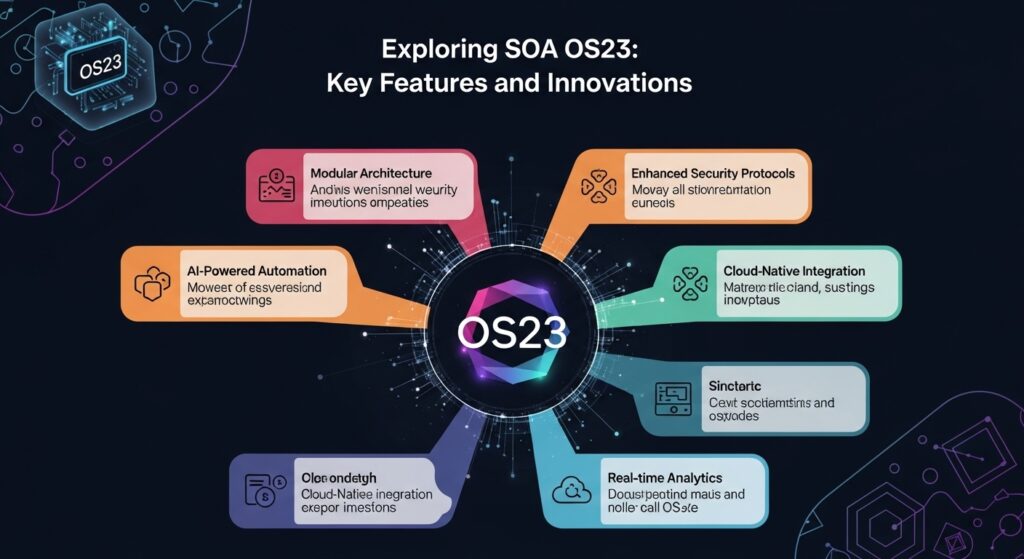
SOA OS23 brings several standout features that enhance its functionality and user experience.
One of the most notable aspects is its improved interoperability. This allows seamless communication between diverse systems, making integration effortless across platforms.
Scalability is another key feature. The architecture can easily adjust to growing demands, ensuring businesses remain agile in a fast-paced environment.
Enhanced security measures have been implemented as well. SOA OS23 prioritizes data protection with advanced encryption protocols, safeguarding sensitive information against potential threats.
User-friendly interfaces make navigation simpler for everyone involved. With intuitive designs, even those less technically inclined can manage operations effectively.
Real-time analytics capabilities empower users to make informed decisions quickly by providing actionable insights at their fingertips. These advancements position SOA OS23 as a leading solution in today’s competitive landscape.
Innovations in SOA OS23 compared to previous versions
SOA OS23 introduces a range of innovations that set it apart from its predecessors. One standout feature is enhanced modularity, allowing developers to create applications with greater flexibility. This change facilitates easier updates and integrations.
Another significant innovation is the integration of AI-driven analytics. Users can now harness real-time data insights directly within their workflows, streamlining decision-making processes like never before.
Security has also received a major boost in SOA OS23. Advanced encryption protocols ensure that data remains secure across all channels, addressing concerns prevalent in earlier versions.
Additionally, improved API management tools simplify the connection between various services. Developers can manage APIs more intuitively, resulting in faster deployment times and reduced bottlenecks during development phases.
These advancements collectively enhance performance and user experience while aligning with modern technological demands.
Benefits of using SOA OS23
SOA OS23 brings a range of benefits that cater to modern business needs. Its flexibility allows organizations to adapt quickly to changing market conditions. Companies can scale their operations without the heavy lifting often associated with traditional systems.
Another key advantage is improved interoperability. SOA OS23 enables seamless communication between diverse applications and services, reducing integration challenges. This interconnectedness fosters collaboration across departments and enhances overall efficiency.
The platform’s user-friendly interface simplifies processes for developers and end-users alike. With intuitive tools at their disposal, teams can innovate faster than ever before.
Security features in SOA OS23 are robust, ensuring data integrity while facilitating compliance with regulations. Enhanced security measures provide peace of mind as organizations handle sensitive information.
Cost-effectiveness stands out as an essential benefit. By streamlining operations and minimizing redundancies, businesses can allocate resources more effectively while maximizing ROI on technology investments.
Real-world examples of success using SOA OS23
Companies across various sectors have embraced SOA OS23, showcasing its transformative power.
For instance, a leading e-commerce giant utilized SOA OS23 to streamline their supply chain management. By integrating disparate systems seamlessly, they reduced operational delays and improved inventory accuracy.
In the healthcare sector, an innovative hospital network leveraged SOA OS23 to enhance patient data accessibility. This resulted in faster decision-making processes and better patient outcomes.
Additionally, a financial services firm adopted SOA OS23 to improve regulatory compliance and reporting efficiency. The automation of these workflows allowed them to save time while maintaining strict adherence to industry regulations.
These examples illustrate how diverse organizations are harnessing the capabilities of SOA OS23 to achieve their goals and drive growth in competitive markets.
Future developments and updates for SOA OS23
The future of SOA OS23 is poised for exciting advancements. Developers are already discussing the integration of artificial intelligence to enhance automation and decision-making processes.
In addition, improvements in interoperability with other frameworks are on the horizon. This would allow seamless communication between different systems, breaking down silos in enterprise architecture.
Cloud-native capabilities are also set to expand. Enhanced scalability will empower organizations to adapt quickly to changing demands without compromising performance.
User feedback is steering the development team toward more intuitive interface designs. A focus on usability ensures that even non-technical users can leverage its full potential effortlessly.
These developments promise a dynamic roadmap for SOA OS23, making it an essential tool for modern enterprises navigating complex digital landscapes.
Conclusion
Exploring SOA OS23 reveals a platform that is not just an upgrade but a significant transformation in service-oriented architecture. The history of SOA shows us how far we’ve come, evolving from basic integration techniques to the refined and robust capabilities seen in OS23.
The key features of SOA OS23 set it apart from its predecessors, offering enhanced flexibility and scalability. Innovations such as advanced data handling and automated processes push the boundaries of what organizations can achieve with their systems. These improvements bring tangible benefits like reduced costs, increased efficiency, and improved customer satisfaction.
Real-world applications demonstrate how enterprises are leveraging SOA OS23 for success across various industries. Companies report smoother operations, quicker response times, and greater adaptability to market changes due to this powerful framework.
Looking ahead, continued developments promise to refine these capabilities even further. As technology evolves at a rapid pace, staying updated with updates related to SOA 0S23 will be essential for businesses aiming for sustained success.
SOA OS23 stands poised as a game-changer in the landscape of digital solutions. Embracing its offerings may well be the key for organizations seeking innovation in an ever-competitive environment.